
What does nearly $500 billion in investment commitments actually mean for Canadians?
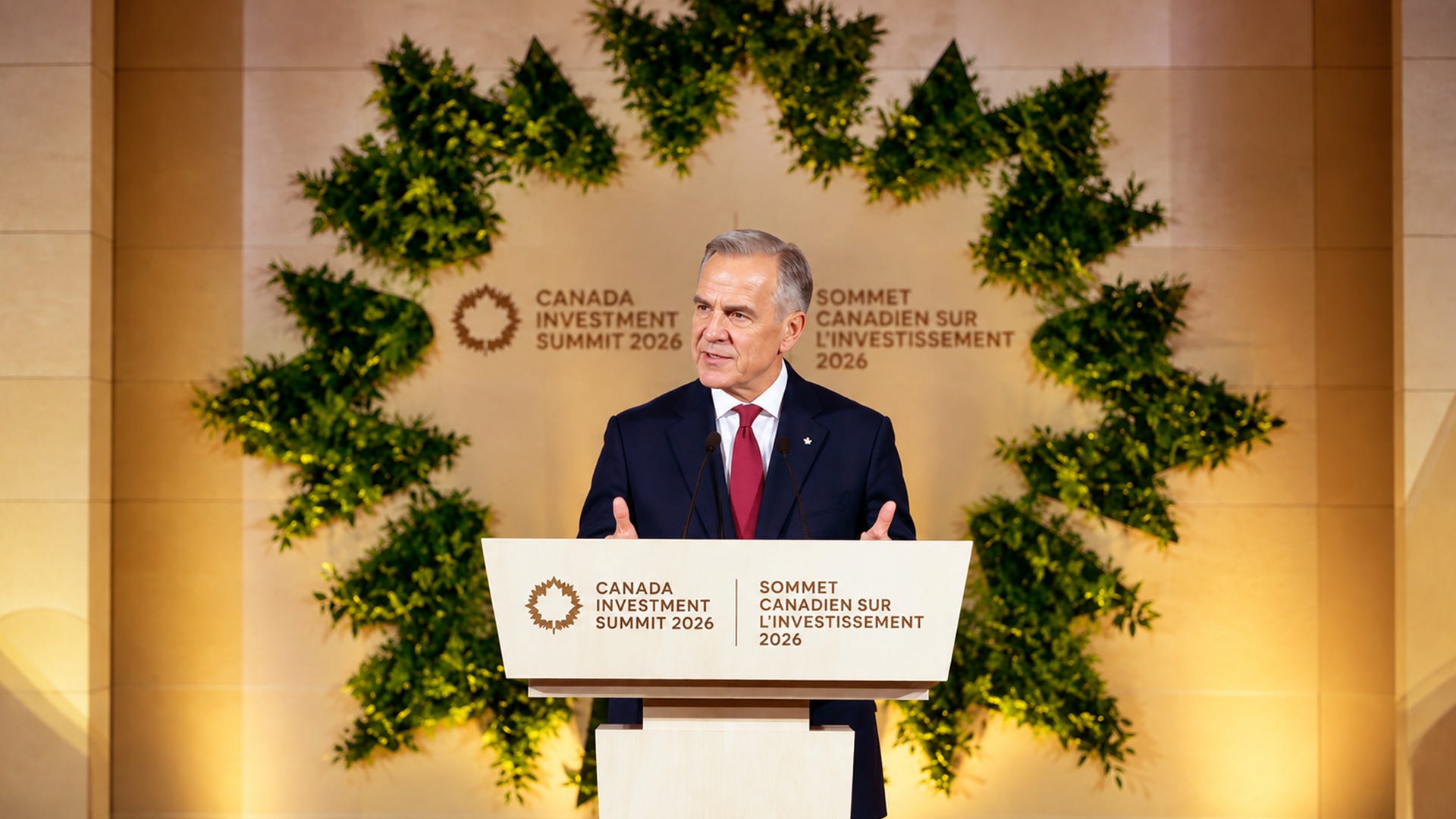
Canada’s first Investment Summit wrapped up in Toronto on September 15, bringing together investors, financial institutions, business leaders and government officials from Canada and around the world.
The headline was hard to miss. The federal government says the summit resulted in nearly $500 billion in new investment commitments to Canada. That includes commitments from Canadian pension funds, banks and other institutions, as well as international investors.
But the bigger story is why Canada is looking for this investment in the first place.
Why Canada Wanted the World to Invest? Why now?
Canada has plenty of capital of its own. Our pension funds, banks, insurers and investment institutions control enormous amounts of money. Canadian institutions announced nearly $100 billion in new capital for Canadian assets during the summit, while Canada’s major banks committed almost $325 billion in new financing for businesses and infrastructure.
The issue is that Canada also has some very large projects it wants to build.
Energy infrastructure, electricity grids, critical-mineral projects, AI and data centres, transportation infrastructure, defence manufacturing and other major industrial projects require billions of dollars and often take years to develop.
Canada is also trying to broaden its economic relationships at a time when its traditional dependence on the United States has become more complicated. The summit was therefore part of a larger effort by the federal government to attract investment and build stronger economic connections with Europe, Asia and other markets. Reuters reported that more than 160 Canadian projects were being presented to potential investors around the summit.
The government’s broader target is to catalyse $1 trillion in total investment over five years.
So the summit wasn’t simply about finding someone to finance Canada’s next project. It was about putting Canadian companies and major projects in front of some of the world’s largest pools of capital.
Who came to Canada?
The summit attracted investors from nearly 30 countries representing more than $100 trillion in assets under management, according to the federal government. Among the major international names were BlackRock and Blackstone, while Canadian participants included CPP Investments, PSP Investments and the Ontario Teachers’ Pension Plan.
And there were some substantial announcements.
CPP Investments and Brookfield launched a $50-billion Maple Fund aimed at Canadian infrastructure and strategic industries. PSP Investments said it would increase its Canadian investments by 30 to 40%, adding approximately $25 billion. Ontario Teachers’ announced another $10 billion for Canadian opportunities, while Sun Life committed $5 billion over five years to critical infrastructure.
The summit also produced one of the country’s largest AI infrastructure announcements. Bell Canada and the Government of Saskatchewan announced a 1.2-gigawatt AI infrastructure hub with a stated capital investment of $52.5 billion and more than 4,500 expected jobs across construction, operations and related services.
There were also new commitments involving critical minerals, energy, defence, transportation and digital infrastructure.
But does foreign investment mean foreign control?
This is an understandable concern whenever Canada actively invites outside investors.
The answer depends on the deal.
Foreign investment can mean financing a Canadian project, taking a minority ownership position, partnering with Canadian investors or acquiring a controlling interest in a company. Those arrangements can have very different implications for Canadian ownership and decision-making.
The government’s proposal for Canada’s four largest airports is a useful example.
Ottawa wants to attract private capital through long-term concessions to operate the airports in Toronto, Montreal, Vancouver and Calgary, while retaining public ownership of the underlying land and assets. The government says any foreign investment would also be subject to Canada’s investment and national-security review processes.
That means bringing in international capital doesn’t automatically mean Canada is selling the airport or handing another country control of it.
But the concern doesn’t disappear.
Whenever outside investors become involved in important infrastructure or strategic industries, the details matter. Canadians will reasonably want to know how much ownership is changing hands, who controls the operation, how long an agreement lasts, what protections are included and where the economic benefits ultimately go.
That’s particularly important when the asset involves transportation, energy, telecommunications, critical minerals or other areas considered strategically important to Canada.
What does the $500 billion really mean?
There’s an important qualification to the headline number.
Nearly $500 billion in commitments is not the same as $500 billion already invested in Canada.
The figure includes investment commitments, financing and capital that institutions say they intend to deploy. Some projects will take years to reach construction and completion. Even the head of CPP Investments acknowledged that the real measure of the summit will be what happens after the event.
That is where the story gets more interesting.
The summit is over. Now Canada has to turn announcements into projects.
If the commitments lead to new mines, energy infrastructure, factories, data centres, technology companies and transportation projects, the impact could extend well beyond the investment itself. It could mean more jobs, greater productivity, stronger Canadian companies and infrastructure that supports the economy for decades.
But those results won’t come from a press release. They’ll come from projects actually being financed, approved and built.
Canada is opening the door—but the terms matter
There is nothing unusual about Canada seeking foreign investment. Countries compete for global capital all the time.
What is different now is the scale of Canada’s ambitions and the urgency behind them.
Canada wants to build more, attract more capital and diversify its economic relationships while maintaining Canadian ownership and decision-making where it matters most.
The Investment Summit was essentially an invitation to the world: Canada has the resources, talent, companies and opportunities. Bring your capital and build with us.
Whether that invitation pays off will depend on what happens next.
For Canadians, the most important question isn’t simply how much money was announced in Toronto. It’s whether that money helps build a more productive, competitive and resilient Canadian economy—and whether Canadians see a meaningful share of the benefits.
Key investment announcements
$50 billion — CPP Investments + Brookfield: A new Maple Fund focused on Canadian infrastructure and strategic industries.
$25 billion — PSP Investments: Plans to increase its Canadian investments by 30% to 40%.
$10 billion — Ontario Teachers’ Pension Plan: Additional investment in Canadian opportunities by the end of 2027.
$5 billion — Sun Life: New investment in critical infrastructure over the next five years.
Nearly $325 billion — Canada’s major banks: TD, Scotiabank and BMO announced new financing and investment capacity for Canadian businesses and infrastructure.