

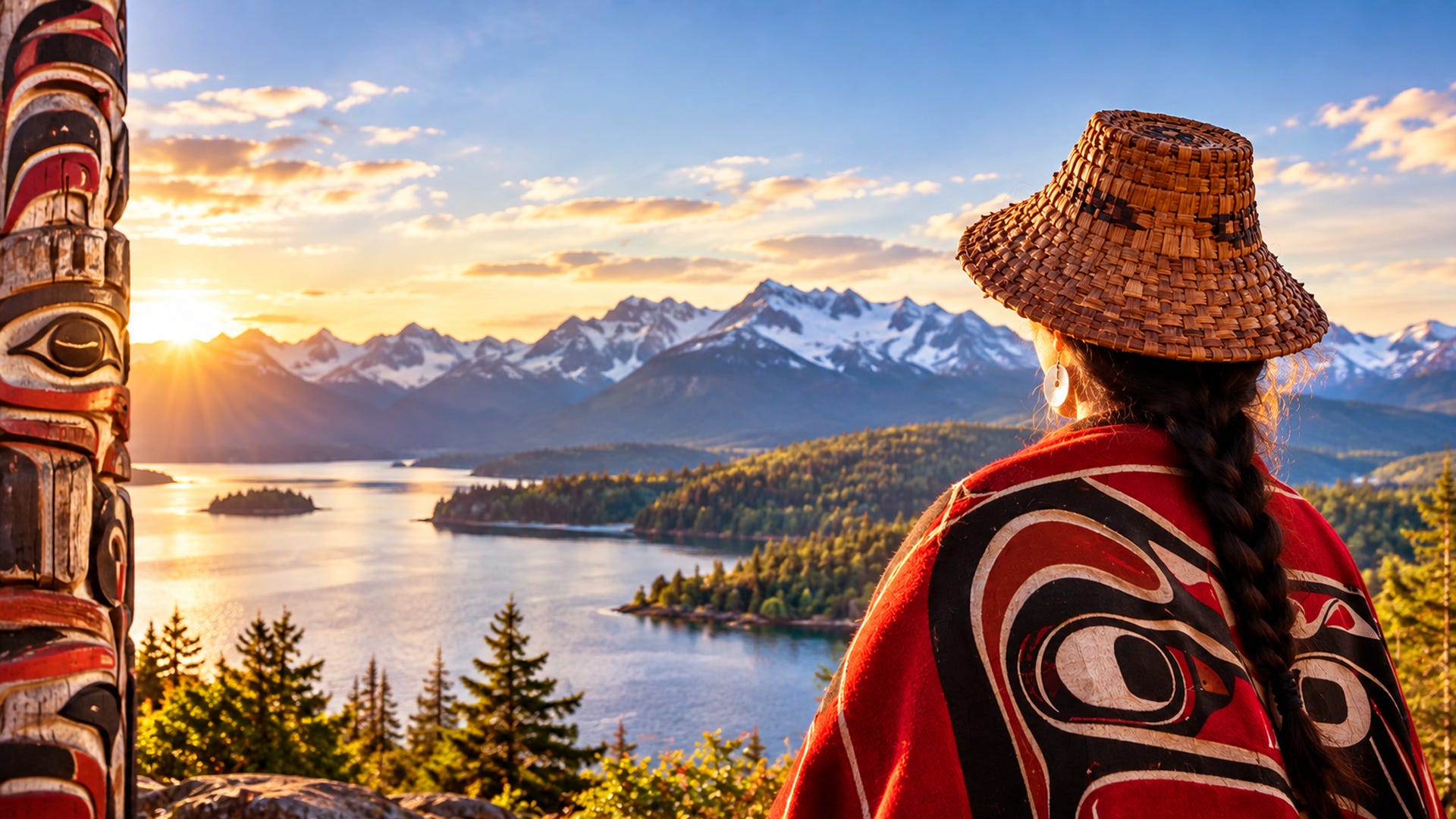
September 30 is Canada’s National Day for Truth and Reconciliation, a day to honour residential school Survivors, remember the children who never returned home, and recognize the lasting impacts of the residential school system on First Nations, Inuit and Métis communities.
The National Day for Truth and Reconciliation was established in response to Call to Action 80 of the Truth and Reconciliation Commission of Canada, which called for a national day to honour Survivors, their families and communities. September 30 also coincides with Orange Shirt Day, an Indigenous-led movement inspired by residential school Survivor Phyllis Webstad.
Truth and Reconciliation Day is an important time to learn about Canada’s history. But learning doesn’t have to stop with a book, documentary or classroom.
Across Canada, Indigenous communities are welcoming visitors into cultural centres, museums, heritage sites, farms, trails and tourism experiences where people can hear stories, see traditional and contemporary art, learn about Indigenous food and discover cultures that have been here since time immemorial.
The Indigenous Tourism Association of Canada also provides a national directory of Indigenous tourism experiences for Canadians who want to explore even further.
Here are 10 places worth putting on your Canadian travel list.
1. Mādahòkì Farm — Ottawa, Ontario
Just outside downtown Ottawa, Mādahòkì Farm offers a different way to experience Indigenous culture.
The farm is home to Indigenous experiences and events, an Indigenous marketplace and a growing herd of endangered Ojibwe Spirit Horses. Mādahòkì also hosts cultural programming and seasonal events.
Visitors can learn about Indigenous culture while exploring the farm and its natural surroundings, meeting the Spirit Horses and taking part in special programming.
The farm is located at 4420 West Hunt Club Road in Nepean, making it a relatively accessible destination for visitors from Ottawa and Eastern Ontario.
For Canadians looking for an introduction to Indigenous culture without travelling across the country, Mādahòkì Farm is an intriguing place to start.
2. Woodland Cultural Centre — Brantford, Ontario
The Woodland Cultural Centre near Brantford and Six Nations of the Grand River offers visitors an opportunity to learn about Hodinohsho:ni culture, history and art.
The centre is also located at the former Mohawk Institute Residential School, one of Canada’s oldest residential schools. Its work includes preserving and interpreting the history of the institution and the experiences of Survivors.
That makes Woodland a particularly significant destination when visiting around Truth and Reconciliation Day.
But the centre’s story extends beyond residential schools. Exhibitions and programming also explore Indigenous culture, art and traditions.
Visit the Woodland Cultural Centre
3. Niagara Glen — Niagara Falls, Ontario
Millions of people visit Niagara Falls every year, but there is another way to experience the Niagara landscape.
Niagara Parks has created Rekindling All Our Relations, a free, self-guided Indigenous audio tour through the Niagara Glen.
The experience combines Indigenous music, stories and teachings with a hike through one of Niagara’s most spectacular natural areas. Niagara Parks describes it as a way to develop a deeper connection with nature and Indigenous perspectives.
It is a particularly interesting example of how Canadians can encounter Indigenous history and teachings while exploring a landscape they may already know.
Learn about the Rekindling All Our Relations audio tour
4. Wanuskewin Heritage Park — Saskatoon, Saskatchewan
Just outside Saskatoon is Wanuskewin Heritage Park, a remarkable place to explore more than 6,400 years of Northern Plains Indigenous history.
Visitors can explore trails, archaeological sites, galleries and interactive exhibits, while guided tours and workshops provide opportunities to learn more about Indigenous cultures.
Wanuskewin also has a bison herd, Indigenous cuisine and regular cultural programming. The park’s trail system extends through the opimihāw Valley, connecting visitors with both the landscape and its long history.
The park is a reminder that Indigenous history in Canada stretches back thousands of years before Confederation — and that Indigenous cultures remain very much alive today.
Visit Wanuskewin Heritage Park
5. Squamish Lil’wat Cultural Centre — Whistler, British Columbia
Whistler is famous for skiing and spectacular mountain scenery. But visitors can also discover the cultures of the Sḵwx̱wú7mesh and Líl̓wat7úl Nations at the Squamish Lil’wat Cultural Centre.
The centre offers guided tours, cultural exhibits, Indigenous cuisine and authentic Indigenous art.
Visitors can hear traditional songs and stories, see cultural belongings and carvings, walk an interpretive forest trail and learn about the relationship between the Squamish and Lil’wat peoples and the land.
There is even an Indigenous-inspired café where visitors can try dishes incorporating local ingredients and traditional influences.
It makes Whistler more than a mountain destination — it becomes an opportunity to understand the people and cultures connected to the landscape.
Visit the Squamish Lil’wat Cultural Centre
6. Haida Heritage Centre — Haida Gwaii, British Columbia
For a truly memorable journey, head to Haida Gwaii.
The Haida Heritage Centre at Ḵay Llnagaay sits on an ancient Haida village site on the northwest coast of British Columbia.
The centre brings together the Haida Gwaii Museum, performance spaces, a carving shed, canoe house and other facilities devoted to Haida culture.
Visitors can explore exhibitions, watch artists at work, attend cultural presentations and learn about Haida language, art and stories.
The centre describes its purpose as celebrating the living culture of the Haida people.
That distinction is important. This isn’t simply a museum about a culture that existed in the past. It is a place where Haida traditions continue to be practised, taught and shared.
Visit the Haida Heritage Centre
7. U’mista Cultural Centre — Alert Bay, British Columbia
On Cormorant Island, off the coast of Vancouver Island, the U’mista Cultural Centre works to preserve and strengthen the cultural heritage of the Kwakwa̱ka̱ʼwakw.
The centre features Indigenous art and cultural collections and also supports the revitalization of the Kwak̓wala language.
The centre is located in Alert Bay, a community where the cultural experience extends beyond a single museum. Visitors encounter the community, landscape, art and history together.
For travellers exploring northern Vancouver Island, it offers another opportunity to learn about a distinct Indigenous culture directly from an Indigenous cultural institution.
8. Eskasoni Cultural Journeys — Cape Breton, Nova Scotia
On Goat Island in Eskasoni, visitors can experience Mi’kmaw culture along a picturesque 2.4-kilometre trail beside the Bras d’Or Lake.
Eskasoni Cultural Journeys offers guided and self-guided experiences featuring storytelling, traditional dance, drumming, food and demonstrations.
Visitors can learn about Mi’kmaq traditions while exploring the island and meeting Mi’kmaq cultural interpreters. Experiences can include traditional cooking, basketry, medicine teachings and other cultural activities.
The result is part walking tour, part cultural experience and part introduction to the Mi’kmaq relationship with the land.
Explore Eskasoni Cultural Journeys
9. Metepenagiag Heritage Park — New Brunswick
The story of Metepenagiag Heritage Park reaches back more than 3,000 years.
The Mi’kmaq community of Metepenagiag has passed its history down through generations of oral tradition. Archaeological discoveries in the area eventually led to the recognition of two National Historic Sites.
Today, visitors can explore the heritage park and learn about Mi’kmaq life through exhibits, trails and guided experiences.
The park offers both self-guided visits and more in-depth experiences with heritage interpreters.
It is another example of how archaeology and Indigenous oral history can come together to tell a much older Canadian story.
Visit Metepenagiag Heritage Park
10. Musée des Abénakis — Odanak, Quebec
The Musée des Abénakis in Odanak was established in 1965 and is the first Indigenous museum in Quebec.
Located in the ancestral territory of the W8banaki Nation, the museum presents W8banaki history, culture and knowledge through exhibitions and cultural programming.
Visitors can also explore the Tolba Trail, an interpretive nature trail highlighting medicinal plants used by Indigenous peoples.
It is a reminder of the enormous diversity of Indigenous cultures in Canada. First Nations are not one culture with a single history. Different nations have their own languages, traditions, territories and stories.
Reconciliation Can Begin With a Visit
There is no single way to mark Truth and Reconciliation Day.
For some Canadians, September 30 will be a day of remembrance and reflection. For others, it may be an opportunity to learn more about the residential school system, attend a local event or listen to the experiences of Survivors.
And another way to learn is to visit Indigenous cultural destinations and support Indigenous-led tourism.
Canada’s Indigenous cultures are not confined to history books. They are visible in art studios, museums, restaurants, farms, forests, languages, ceremonies, businesses and communities across the country.
This September 30, take a moment to remember the past.
Then, when the opportunity comes, go discover the Canada that is still being written today.